
Get Healthy!
- Posted January 30, 2026
Most Doctor-Made YouTube Health Videos Lack Strong Proof, Study Finds
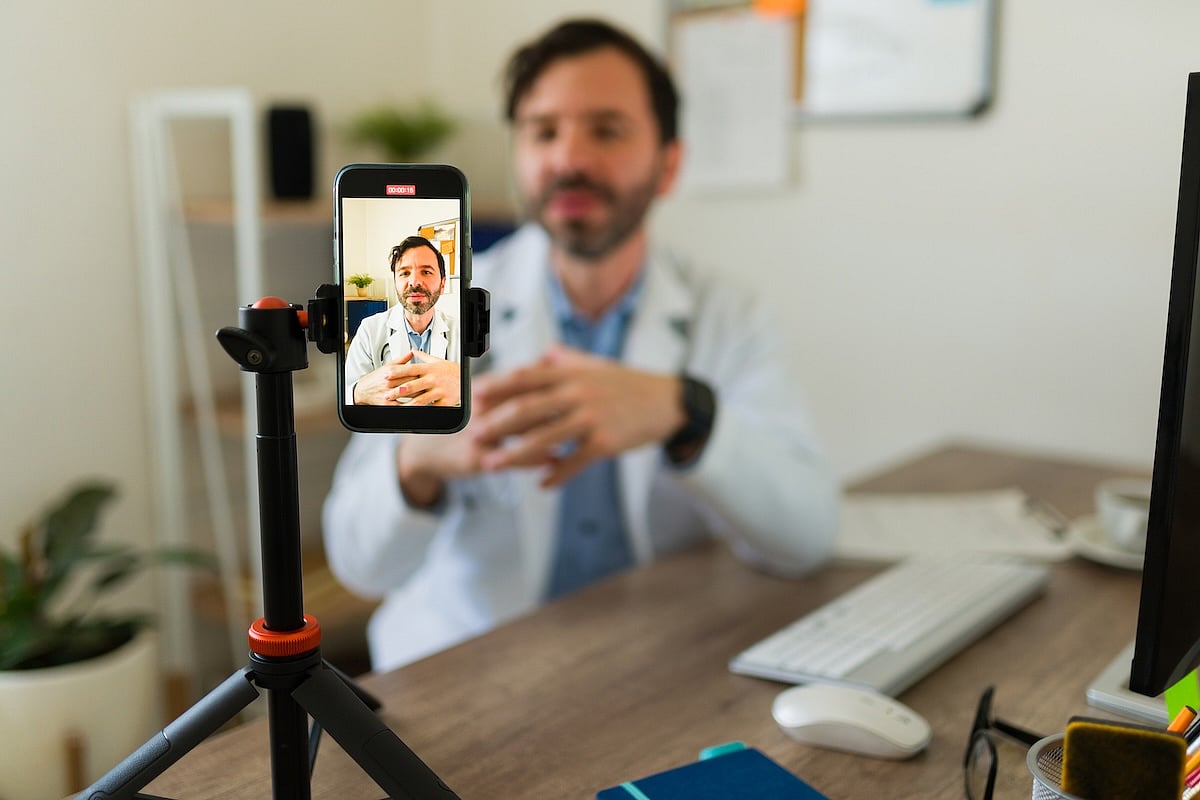
Many health videos on YouTube, even those made by doctors, may not be giving viewers reliable medical information, a new study suggests.
Researchers reviewed 309 popular YouTube videos about cancer and diabetes and found that fewer than 1 in 5 were supported by high-quality scientific evidence.
About two-thirds had low, very low or no evidence at all to back up their health claims.
Even more concerning: Videos with weaker evidence often attracted more viewers than those backed by strong science.
The study, published recently in JAMA Network Open, looked only at videos created by health professionals that had at least 10,000 views.
"This reveals a substantial credibility-evidence gap in medical content videos, where physician authority frequently legitimizes claims lacking robust empirical support," said lead author Dr. EunKyo Kang of South Korea’s National Cancer Center.
"Our findings underscore the necessity for evidence-based content-creation guidelines, enhanced science communication training for health care professionals, and algorithmic reforms prioritizing scientific rigor alongside engagement metrics," Kang added in a news release.
For the study, the team reviewed videos June 20 and 21, 2025, focusing on cancer and diabetes content. In all, 75% of the videos were made by physicians. The videos had a median count of about 164,000 views. (Median means half had more views, half fewer.) Their median length: 19 minutes.
Researchers used a new scoring system called E-GRADE to rate the strength of evidence behind each video’s claims:
Grade A (high-quality evidence): 19.7%
Grade B: 14.6%
Grade C (low): 3.2%
Grade D (very low/no evidence): 62.5%
Videos with the weakest evidence were 35% more likely to get higher view counts than videos with strong scientific evidence, the study found.
Richard Saver, a professor of law at the University of North Carolina at Chapel Hill, said this issue goes far beyond YouTube.
"Physician-spread misinformation is a long-standing problem, dating back well before the internet era," he wrote in an accompanying editorial.
Saver added that some doctors still rely on personal experience instead of hard data, even though evidence-based medicine (EBM) is considered the gold standard.
"Among other reasons, EBM seemingly devalues the individual clinician's judgment," Saver added.
"Certainly, more research in this area is needed," Saver concluded. "But this study ... highlights the need, and offers a useful framework, for looking at the underlying evidence when assessing health professionals' social media claims."
More information
The National Institutes of Health has more on the impact of social media on health.
SOURCE: MedPage Today, news release, Jan. 24, 2026


